A beautiful lake view can pull you in fast, but on Lake Minnetonka, shoreline details often shape your day-to-day experience just as much as the house itself. If you are searching in the 55391 area, two homes can look similar on paper and still live very differently once you factor in dock depth, bay exposure, slope, and access rights. This guide will help you understand the shoreline traits that matter most so you can compare properties with more confidence. Let’s dive in.
Why shoreline matters on Lake Minnetonka
Lake Minnetonka is the largest lake in the Twin Cities metro and spans more than 14,000 acres. It is also a system of 42 bays, with meaningful differences in depth, surface area, and water conditions from one area to another. That means shoreline is not just a backdrop. It is a real market variable.
For you as a buyer, this matters because similar frontage does not always mean similar use. One property may support easy boating and calmer lake days, while another may offer broader views but more wake exposure or trickier shore access. In a market like 55391, those differences can shape both lifestyle fit and value.
Compare more than the view
When buyers first tour lake homes, the eye usually goes to the view, the lawn, and the dock. Those features matter, but the more useful question is how the shoreline functions across the season. A site that looks ideal on a sunny showing day may feel very different in late summer, during lower water, or on a busier boating weekend.
Lake Minnetonka’s water depth can vary significantly, even within the same bay. Lake levels also fluctuate seasonally. That is why shoreline comparison should be practical, not just visual.
Orientation changes daily use
Sun and wind exposure
Orientation can affect how a shoreline feels morning to evening. Minnesota DNR guidance notes that south- and west-facing slopes tend to get more heat and sunlight and are often windier, while north- and east-facing slopes receive less heat, sunlight, and wind and can retain a bit more moisture.
In real terms, that can shape how comfortable your patio, dock, or shoreline yard feels through the season. A sunnier exposure may support long afternoon lake use, while a more shaded setting may feel cooler and quieter at certain times of day. It can also influence the amount of vegetation maintenance a site may need.
How to think about orientation
As you compare homes, consider questions like these:
- When does the backyard get direct sun?
- Does the dock feel exposed to wind?
- Will you use the shoreline more in the morning or afternoon?
- Does the setting feel dry and open or cooler and more shaded?
These are lifestyle questions, but they can also affect how strongly a property fits your routine.
Dock depth affects boating use
Not every dock works the same way
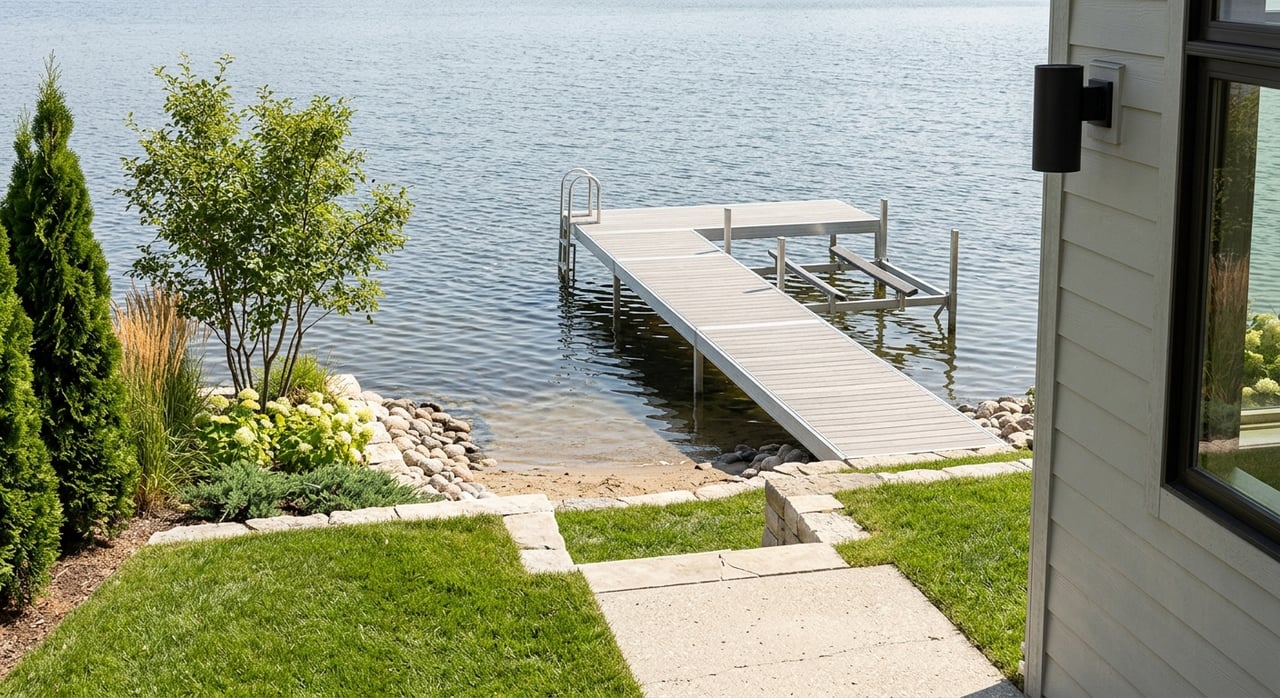
One of the biggest practical differences between shoreline properties is dock depth. LMCD notes that water depths can vary significantly in bays and even within the same bay. It also advises checking existing depth against the 929.4-foot ordinary high water level, while keeping in mind that fall water levels can sit below that mark.
For you, this means a dock that works well for one watercraft or lift setup may not work as well for another. A home can have appealing frontage and still be a weak fit if the depth at the dock does not match how you plan to use the lake.
What buyers should verify
It helps to confirm depth during more than one condition, not just at a showing. A strong buyer review should include:
- Depth at the dock during typical conditions
- Depth during lower-water or late-season periods
- Your intended watercraft draft compared to local depth
- Whether sediment buildup may affect usability if the dock is not used regularly
This is one of the clearest examples of why shoreline value is highly specific to the site.
Bay setting shapes feel and activity
Sheltered bay or open-water stretch
Not all lakefront settings create the same experience. LMCD rules require 5 mph within 300 feet of shore and in designated quiet-water areas, and lake maps identify quiet-water areas, channels, point buoys, and other navigational features. The DNR also notes that Lake Minnetonka sees heavy recreational use.
That often creates a tradeoff. Main-lake or channel-adjacent homes may offer a more open-water feel, but they can also come with more wake and traffic exposure. Sheltered bay locations often feel calmer and more private.
Match the setting to your priorities
As you compare shoreline homes in 55391, think about the lake experience you want most:
- Broader views and quicker open-water access
- Calmer water near the dock
- Less nearby boat traffic
- A more private-feeling shoreline setting
There is no universal best choice. The right fit depends on how you plan to use the property.
Topography affects access and upkeep
Slope can help or complicate use
A sloped shoreline can create impressive views, but it may also change how easy the property is to use every day. Steeper sites can require more careful erosion control and may be less convenient when you are moving between the house and the water.
If you picture frequent lake use, carry that thought beyond the view. Ask yourself how the route to the shoreline works for guests, gear, and regular day-to-day use.
Shoreline condition matters too
The DNR notes that shoreline erosion can be driven by fluctuating water levels, wave or wake action, ice pushes, loss of natural vegetation, and human activity. It also notes that healthy shoreline vegetation helps stabilize soil, filter runoff, and provide natural screening.
That makes shoreline condition an important part of a home search. A more natural shoreline buffer may support privacy and long-term stability, while a heavily altered edge may deserve closer review for maintenance and function.
Vegetation does more than frame the view
It is easy to treat shoreline vegetation as a cosmetic feature, but it has practical value too. According to the DNR, native shoreline vegetation can help protect banks from erosion, improve water quality, and support privacy. LMCD also recommends shoreline buffers for stabilization, water quality, and added privacy from lake users.
For buyers, this means the best shoreline is not always the most cleared one. A property with thoughtful vegetation can offer a stronger blend of usability, screening, and shoreline protection.
Access rights can change use
Some waterfront properties do not offer the same rights or use patterns as others. LMCD notes that easements, common land, shared access arrangements, multiple-dock areas, variances, and other site-specific conditions can affect how a parcel may be used.
That is a critical point in a shoreline search. Before you assume a property offers full private lake use, confirm whether the parcel includes full riparian rights, shared rights, an easement, or common shoreline access. Those details can affect setbacks, dock use areas, and watercraft density.
Why shoreline details affect price
Shoreline features influence more than convenience. They can also affect how many buyers see a property as a match. On Lake Minnetonka, dock usability, privacy screening, water depth, slope, and legal access rights can all shape demand.
That logic aligns with broader waterfront valuation research. Studies have consistently found positive value effects for waterfront location and water views, while value tends to decrease with greater distance from the water. For Lake Minnetonka homes, though, the premium is not one-size-fits-all. Shoreline function often helps explain why two lake properties can command very different levels of interest.
A smart shoreline checklist
When you tour homes in the 55391 area, bring a shoreline lens to every showing. A simple checklist can help you compare options more clearly.
Questions to ask at each property
- What is the depth at the dock in typical and late-season conditions?
- Is the home on a bay, quiet-water area, channel, or open-water stretch?
- How exposed is the site to wind, wake, and passing boat traffic?
- Is shoreline access gradual and convenient or steep and complex?
- What kind of vegetation buffer is in place?
- Does the property include full riparian rights, shared rights, or an easement arrangement?
What this means for your search
When you use this checklist, you move beyond surface-level comparisons. You start evaluating how the property will actually function for boating, entertaining, privacy, and long-term enjoyment. That is especially important in a market like Lake Minnetonka, where shoreline differences can be subtle online but significant in person.
Local insight makes comparison easier
Searching shoreline homes near Wayzata and the broader 55391 area often comes down to details that are easy to miss in listing photos. A calm-looking bay may have very different depth than expected. A broad-lawn property may have a slope or access pattern that changes daily use. A beautiful dock may not match your boating plans.
That is why local, property-by-property evaluation matters. When you understand how shoreline traits shape use, upkeep, and buyer demand, you can make a more confident decision and avoid surprises later.
If you are comparing lake homes and want clear guidance on how shoreline differences affect value and fit, Ian Petersen can help you evaluate the details that matter most on Lake Minnetonka.
FAQs
How does shoreline orientation affect a Lake Minnetonka home search?
- Shoreline orientation can change sun exposure, wind, moisture, and how comfortable a dock, patio, or yard feels throughout the season.
Why is dock depth important for Lake Minnetonka buyers?
- Dock depth affects whether your intended boat or lift setup will work well, especially because water depth can vary by bay and season.
What is the difference between bayfront and open-water Lake Minnetonka homes?
- Bayfront homes often feel calmer and more sheltered, while open-water or channel-adjacent homes may offer a bigger-water feel with more wake and traffic exposure.
What should buyers know about shoreline slope on Lake Minnetonka?
- Steeper shoreline sites may offer strong views, but they can be less convenient for everyday lake use and may need more careful erosion management.
Why do access rights matter for waterfront homes in 55391?
- Full riparian rights, shared rights, easements, and common shoreline arrangements can affect dock use, watercraft density, and how the property functions overall.
Does shoreline vegetation add value to a Lake Minnetonka property?
- Vegetation can support privacy, shoreline stability, and runoff control, which may improve both daily enjoyment and long-term shoreline condition.